Discover Fun Ways Cool Teams Run Helpful Machines With RobotsOps

September 29, 2026 · 20 reads
Introduction
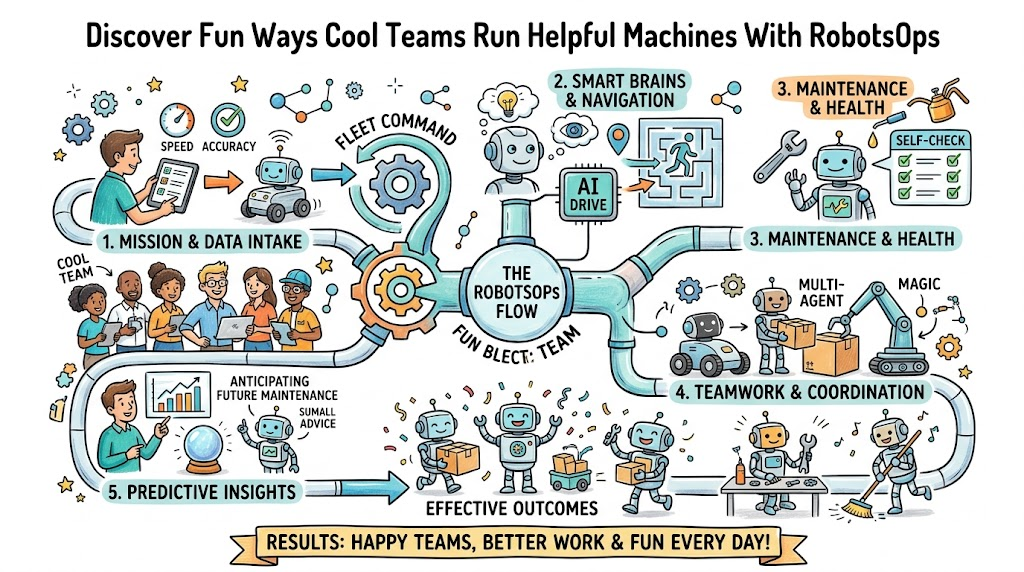
Smart rovers carry heavy boxes across shiny warehouse floors today. Sometimes their wheels slip on slick spots, or low batteries cause them to stall. Our clever human helpers use modern RobotsOps to watch every rolling worker right away.
This special craft brings computer programming and real mechanical gears together. When you pick up tips from the RobotsOps learning hub, you find out how smart crews fix problems before any machine stops. You can master easy steps to guide mechanical buddies smoothly.
How Robotics Operations Guides Every Machine
Busy workshops buzz with spinning wheels, whirring gears, and clicking tools. Good Robotics Operations plans clear daily routes so rolling carts never bump each other.
Engineers monitor battery gauges, track motor heat, and check trip times constantly. If an aisle gets crowded, the computer diverts half the rovers toward another aisle. That clever choice keeps packages moving on time without noisy crashes.
Easy Control With Robot Fleet Management
Guiding one small machine on a test rug feels super simple. Controlling sixty metal workers across two giant warehouses feels like herding sixty speedy puppies. Clever teams use Robot Fleet Management so one person can guide the entire group from a desk.
| Management Tasks | Old Single-Robot Setup | Modern Fleet System |
|---|---|---|
| Sending New Maps | Carry a thumb drive to each cart | Beam updates across Wi-Fi in five seconds |
| Tracking Batteries | Walk around with a voltage meter | Let carts pick charging docks automatically |
| Handling Traffic Jams | Push carts aside with your hands | Direct helpers to empty lanes automatically |
Next, the smart fleet system groups rovers by their open space. You always know which helper can grab a dropped box fastest.
Moving Heavy Metal With Industrial Robotics
Car factories rely on strong steel arms that reach toward the ceiling. We call these mighty, powerful machines Industrial Robotics.
These giant arms bolt doors on cars and paint shiny fenders without any wobble. Workers place yellow safety mats and laser eyes all around the work zone. If someone steps onto the mat, the arm freezes in place instantly to protect the person.
Giving Life Through Robotics Software
Gears, wires, and shiny chrome bodies stay completely still without good instructions. Clever Robotics Software acts like the nervous system inside the metal frame.
It turns fuzzy camera snapshots into safe road paths. It also checks spinning wheel speeds twenty times each second. Clean code lets a rover spot a spilled cup of water and brake gently.
Testing Everything With Robot Simulation
Dropping a real, shiny metal rover down warehouse stairs breaks expensive parts fast. Because of that risk, programmers run Robot Simulation on desktop screens.
This digital world works just like your favorite computer video games. You toss virtual boxes at your machine to see if its code avoids the bump. After your math works inside the game screen, you copy the safe code onto your real rover.
Rolling Safely With Autonomous Mobile Robots
Some mechanical helpers never stay bolted down to a factory floor. We call these rolling helpers Autonomous Mobile Robots.
They glide down quiet hospital hallways to deliver fresh sheets and clean bandages. Lasers bounce off trash cans, open doors, and walking shoes so the rover slows down politely. People never need to push them because these carts steer on their own.
Doing Fast Chores With Robotics Automation
Lifting hundred-pound flour bags all day makes human backs feel super sore. Modern Robotics Automation gives these hard lifting jobs to steel arms and rolling platforms.
Machines stack bags on wooden pallets neatly without ever feeling sleepy. People get to tackle much safer jobs, such as designing smarter tool attachments. Learning resources on RobotsOps teach people how to hook up these automated factory lines.
Peeking Inside The Robotics Operations Center
Picture a room full of huge glowing monitors and comfy chairs. That room is a real Robotics Operations Center.
Wall displays show live camera feeds, rolling speeds, and flashing green symbols. If a rover rolls into an unexpected pile of packing tape, an alarm rings softly. A remote operator grabs a handy steering wheel and rolls the cart backward safely.
Talking One Language Through ROS 2
Robots pack cameras, sonar sensors, and spinning electric motors into one body. Most teams connect these pieces with ROS 2.
This popular tool lets the camera chat with the motor board without messy bugs. Beginners read great walk-through lessons on RobotsOps to practice simple coding. You can build your own two-wheeled rover code on your home computer.
Who Handles These Machines Daily
Different people share chores to keep machine teams running smoothly:
- Software Builders: They write quick navigation instructions and fix weird glitches.
- Safety Leaders: They paint walkway lines and test bright red emergency stop switches.
- Route Planners: They tell rovers which cargo pallets need rides first.
- Field Mechanics: They swap worn rubber wheels and clean dirty camera glass.
Frequently Asked Questions About RobotsOps
Which chores does a RobotsOps team do first?
They build tools that check robot battery levels, fix navigation glitches, and track fleet locations.
Can fifth graders test robot code safely at home?
Yes, you can run virtual rovers inside computer simulators without buying real hardware.
How does an autonomous rover tell boxes apart from humans?
Cameras and laser sensors measure the shapes of items to identify moving legs quickly.
Why do rolling carts need fresh map data every morning?
Workers rearrange wooden pallets and shift boxes, which changes the open hallways.
What happens if a cart loses its wireless connection?
The machine stops rolling instantly, locks its brakes, and waits for a fresh signal.
How do engineers prevent dangerous collisions on factory floors?
They set safe speed limits and tell sensors to scan five feet ahead at all times.
Why do giant factory arms move so accurately?
Precise metal gears count tiny motor spins to hit the exact same spot every time.
Does practicing in a digital world save real money?
Yes, virtual crashes cost zero dollars and show you where your code needs quick fixes.
Who monitors warehouse helpers during the middle of the night?
Control teams check remote dashboard alerts and steer stuck rovers from their computer screens.
Where can curious learners explore more about fleet tools?
The friendly community at RobotsOps shares step-by-step guides, project ideas, and helpful tutorials.
Closing Thoughts On Running Cool Rovers
Machines help humans finish hard work faster, safer, and with fewer mistakes. Guiding a whole squad of rolling helpers feels like playing a massive strategy game in real life. With curious thinking and steady practice, anyone can learn these neat skills. Check out the open lessons on RobotsOps and build your first machine project today!
Leave a Reply