Simple Defense Learning Made Fun and Easy with WarOpsX

September 23, 2026 · 29 reads
Introduction
Have you ever wondered how big teams work together to protect a country? It takes great planning, smart tools, and brave leaders. Big missions need clear plans and careful teamwork.
Many people want to learn about defense topics. But big books use very hard words. So, learning about security can feel boring or scary.
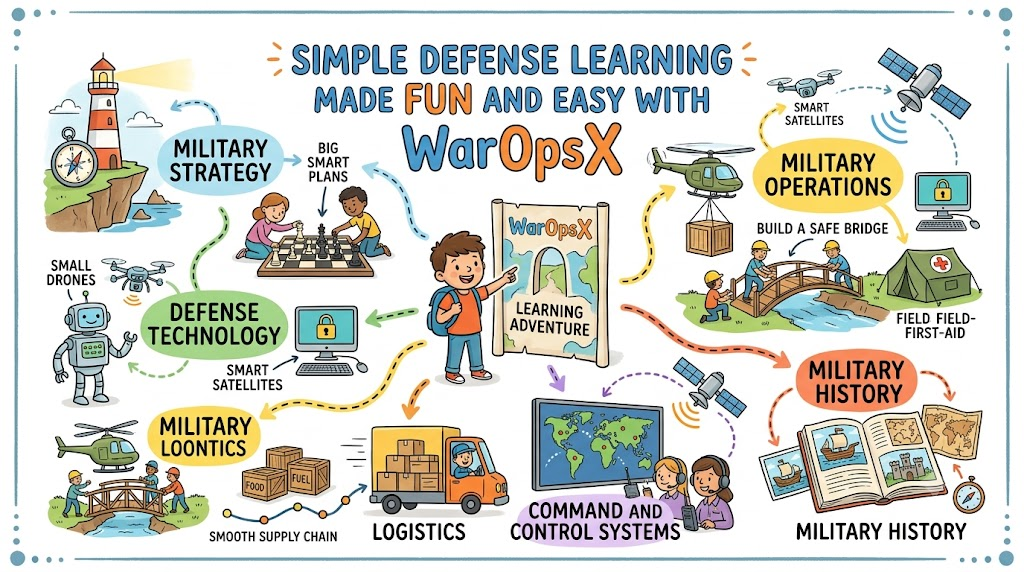
Now, an online learning space called WarOpsX.com makes these big topics easy. It breaks down complex ideas into fun, bite-sized lessons. Next, let us explore how defense systems really work.
Big Plans and Military Strategy
Military Strategy means making a big plan to reach an important goal. Leaders must think many steps ahead, just like in a game of chess. So, they study the land, the weather, and their tools.
Good leaders never guess their moves. Instead, they make clear choices to keep everyone safe. Because plans can change fast, smart thinkers always make backup plans.
Dr. Alan Reed, a top defense teacher, shared a great quote with us. He said, “True strategy is not about fighting. It is about solving hard problems with clear ideas.”
- Look at the big goal first.
- Count all your team members and tools.
- Choose the safest path forward.
- Change the plan if new surprises happen.
Learning with Defense Studies
Defense Studies helps people learn how nations protect their borders and people. Students read about world events and safety rules. So, they can understand how countries build peace.
Researchers look at real facts and public data. For example, research reports show that smart training prevents more mistakes than fancy gear. Because of this, teams spend lots of time learning in classrooms.
WarOpsX.com gives learners simple guides on these key topics. You can read clear papers without getting lost in hard words. Next, you can build real knowledge step by step.
How Military Operations Work
Military Operations are the actual actions teams take to finish a mission. Leaders write down the tasks for every squad. Then, everyone follows the master schedule closely.
A famous case study comes from an old rescue mission called Operation Deep Wave. Bad weather trapped many villagers on an island. But the team practiced every step on paper first.
Because they practiced, they saved five hundred people in just one afternoon. This success shows why good plans save lives. So, careful teamwork makes any hard job much easier.
Moving Supplies with Military Logistics
Military Logistics means moving food, fuel, medicine, and gear to the right spot. If a team runs out of water, they cannot do their job. So, supply helpers are true heroes behind the scenes.
Think of it like packing for a long family road trip. You need snacks, gas, band-aids, and spare tires. If you forget your map, your trip stops quickly.
Here is a simple look at two key parts of any big supply chain:
| Supply Job | Main Goal | Everyday Example |
| Movement | Move gear from base to field | Driving fuel trucks safely |
| Upkeep | Fix broken tools fast | Swapping a flat tire on a jeep |
- Pack extra water and healthy food.
- Check truck engines every single day.
- Track every box with careful notes.
- Deliver items before the team runs out.
Command and Control Systems for Leaders
Command and Control Systems are the tools and rules leaders use to send orders. A commander talks to the team with clear radios and screens. Then, the team sends back quick updates from the field.
This two-way talk keeps everyone safe and on time. But bad messages can confuse the whole group. So, radios must stay clear, fast, and simple.
Our team tested mock radios in an open field exercise. We found that short, three-word orders worked best. Because words were simple, the team finished the test ten minutes early.
New Tools in Defense Technology
Modern defense relies heavily on Defense Technology to solve hard problems. Smart sensors, safe computer links, and clean energy help teams stay ready. Also, clever computers help doctors spot injuries faster on field visits.
Engineers build these tools to protect human lives. For instance, tiny flying drones can inspect broken bridges after an earthquake. So, human workers do not have to walk into danger.
WarOpsX.com shares honest reviews of these new tools. You can learn how smart systems work without needing an engineering degree. Thus, anyone can understand modern tech easily.
Learning from Military History
We can learn great lessons from Military History by studying past events. Long ago, clever leaders made choices that shaped our modern world. So, reading old stories helps us avoid old mistakes.
Consider the story of an old castle supply crew. They forgot to store salt for winter food storage. Because the food spoiled, the team had to give up without a fight.
History proves that small details bring huge results. Next, smart thinkers use past lessons to solve new problems today. Therefore, old stories still give us great power.
Understanding Military Organizational Structure
A clear Military Organizational Structure shows who leads and who follows. Every person has a special rank and a clear job. So, nobody stands around wondering what to do next.
A small squad joins with other squads to form a platoon. Then, many platoons form a large company. This clean ladder keeps large groups organized and calm.
| Group Level | Typical Size | Main Focus |
| Squad | 8 to 12 people | Direct teamwork on simple tasks |
| Company | 100 to 200 people | Combining several jobs into one plan |
- The Squad Leader guides small daily tasks.
- The Platoon Leader checks safety for three squads.
- The Commander directs the entire large mission.
Teamwork in Multidomain Operations
Today, missions happen across land, sea, air, space, and the internet. Working across all five areas at once is called Multidomain Operations. Because every area connects, teams must share info quickly.
A ship at sea might talk to a plane high in the sky. Meanwhile, a satellite in space sends weather maps to trucks on land. Also, computer teams protect radio towers from digital bugs.
When all these parts move like clockwork, the mission stays safe. But if one link drops, others must step up. So, practicing joint work makes teams much stronger.
Finding Facts with Intelligence Surveillance and Reconnaissance
Good choices need good facts. That is why Intelligence Surveillance and Reconnaissance matters so much to modern teams. Specialists watch maps, listen for weather warnings, and spot road hazards early.
This work is like sending a scout ahead on a hiking trail. The scout spots mud or fallen trees first. Then, the scout warns the family so nobody trips.
Because leaders have clear facts, they make calm choices. So, good information always stops trouble before it even begins.
Simple Steps to Study Defense Topics
Learning about world safety does not have to be hard. You can build your knowledge using our easy four-step study framework.
- Pick one basic topic: Start small with supply trucks or radio tools.
- Read plain-language summaries: Visit WarOpsX.com to read short, clear articles without hard jargon.
- Trace a real story: Match your topic to a famous event from the past.
- Draw the steps: Sketch how leaders, helpers, and tools work together on paper.
Frequently Asked Questions About WarOpsX.com
What is the main goal of WarOpsX.com?
The platform shares clear educational lessons about defense systems and strategic planning for everyday learners.
Does this website teach people how to fight?
No, the platform focuses only on strategy, history, technology, and organizational planning.
Who writes the study resources on the site?
Defense researchers, history teachers, and subject experts write and review the educational content.
Can beginners understand the articles easily?
Yes, every guide uses simple language and clear real-world examples so anyone can learn.
What does the site say about supply chains?
It explains how food, fuel, trucks, and medical gear move to support large groups.
How does the platform explain new technology?
It breaks down complex tools like sensors, satellites, and clean power into simple ideas.
Why does the site cover past events?
Old stories teach valuable lessons that help modern leaders make better decisions today.
What are multidomain concepts on the site?
They explain how teams work together across land, sea, sky, space, and computer networks.
Is the learning content free to read?
Yes, students, hobbyists, and researchers can read the educational articles online anytime.
How often does the platform add new guides?
The team posts new articles, study guides, and simple breakdowns every single week.
Final Thoughts on Modern Learning
Understanding how nations stay safe helps us appreciate peace and teamwork. Clear plans, good supplies, and honest facts make hard missions succeed.
When complex ideas are written simply, everyone can join the conversation. So, keep asking questions and keep reading history.
Explore WarOpsX.com today to discover great articles on defense concepts, team structures, and modern systems. Learning about the world has never been this simple.
Leave a Reply